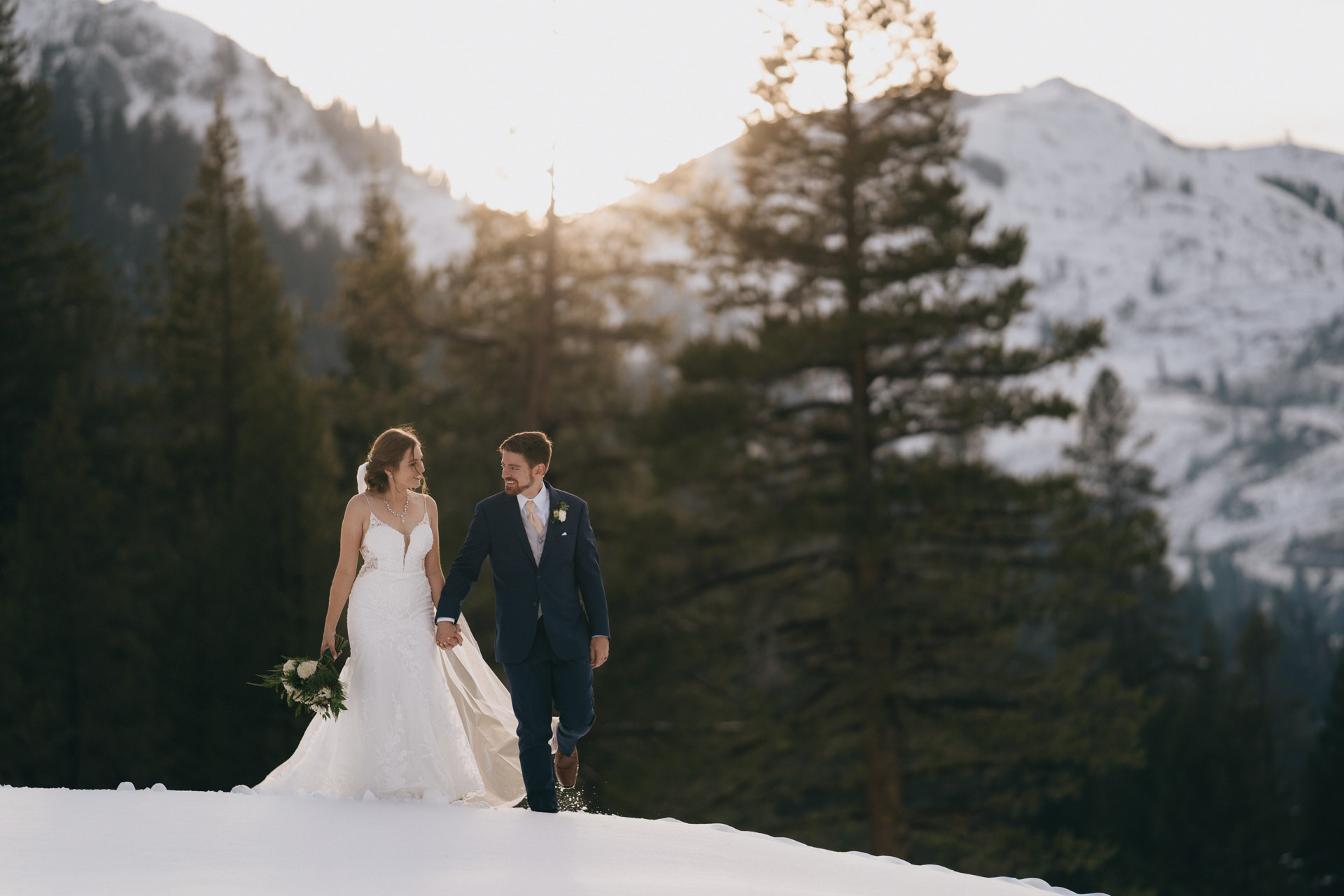
Light is the whole job. At Lake Tahoe it is also the thing that catches couples off guard more than anything else. The lake, the mountains and the altitude all do something to it, and they do it differently depending on where you are standing and what month it is.
I worked in Olympic Valley for four years before I ever shot a wedding there, and I spent a lot of that time watching where the light hit first in the morning and when it left in the afternoon. Here is what I have learned about light at Tahoe, from someone who plans every wedding around it.

The mountains get there before sunset does
This is the big one. Tahoe sits in a bowl of mountains, and at most venues the sun drops behind a ridge well before the sunset time on your phone. Once it does, everything goes into shade. It is soft and pretty for a little while, and then it is dark.
How early depends on where you are. In Olympic Valley in winter the sun can be gone from the valley floor by 3:45pm. In summer it is closer to 7pm. Up at High Camp you are above most of the ridges, so you keep the light much longer. Two venues ten minutes apart can lose their light an hour apart.
If you take one thing from this post, take this: plan around the mountain, not the sunset. I wrote more about timing it in how I build a golden hour timeline.
East shore vs. west shore
Which side of the lake you are on changes everything. The east shore faces west, so places like Sand Harbor get the sun going down right over the water. That is the classic Tahoe sunset photo.
The west shore faces east. The sun goes behind the Sierra crest early, so you lose direct light sooner. What you get instead is sunrise over the lake and long, soft open shade in the evening. Neither is better. They are just different, and you should know which one you are getting before you build your day.

High altitude means hard light
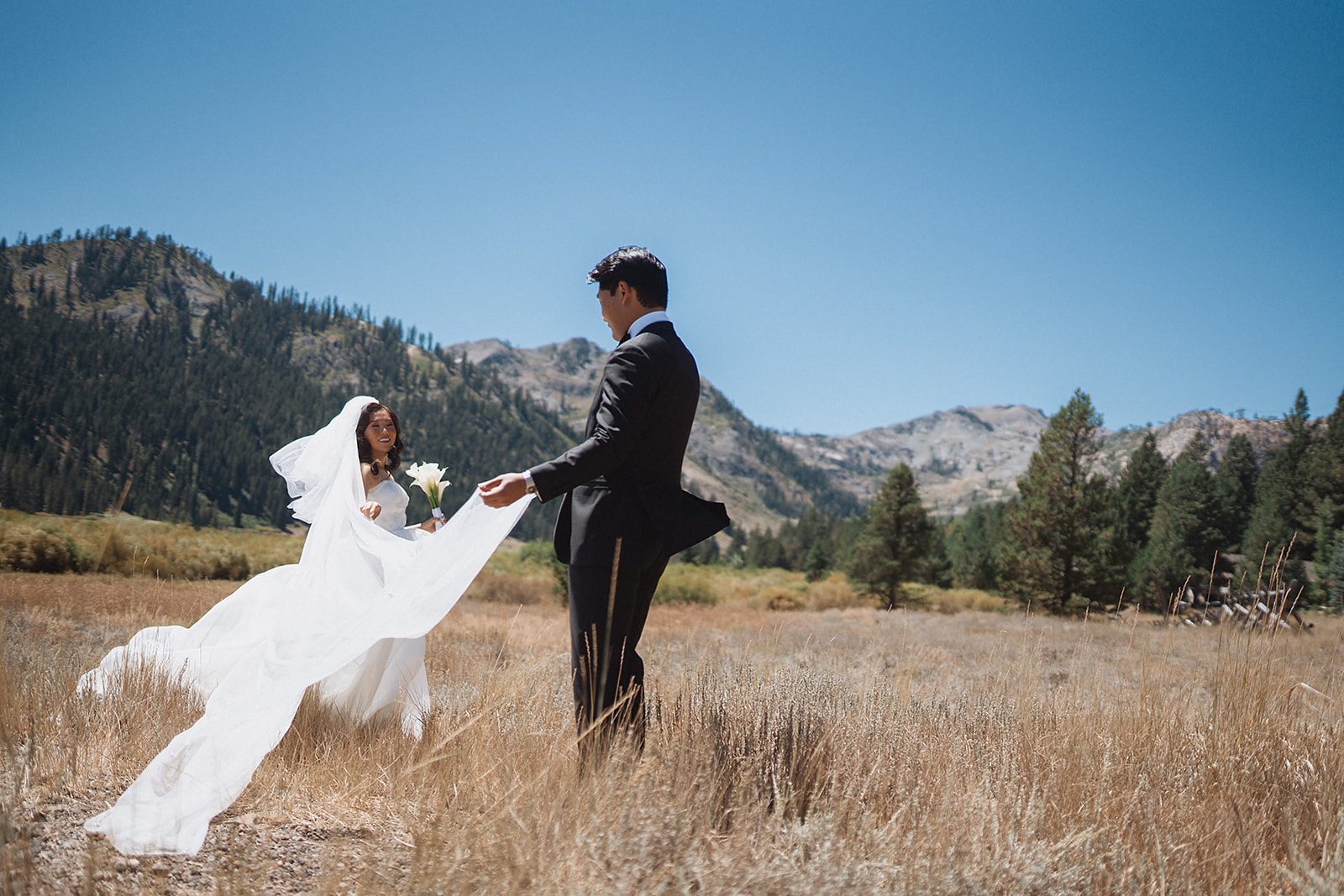
The lake sits at about 6,200 feet. The air is thin and clear and the sun is strong. At noon the light is bright, the shadows are black and everybody squints. It is the least flattering light of the day.
This is why I push ceremony times later when I can, and why I look for open shade under trees or on the shady side of a building in the middle of the day. Once the sun gets low, that same clear air gives you some of the cleanest, warmest light anywhere.
The water is a giant reflector
Lake Tahoe is huge and very clear, and when it is calm it acts like a mirror. Late in the day it throws warm light back up at you. On still mornings it reflects the mountains perfectly. When the water was low at Haley and Mike’s lakefront elopement the whole shoreline turned to glass.
Wind changes all of that fast. Tahoe gets afternoon wind, especially in summer, and the lake can go from glass to whitecaps in an hour. If a calm, reflective lake matters to you, earlier is usually better.

Snow changes the rules
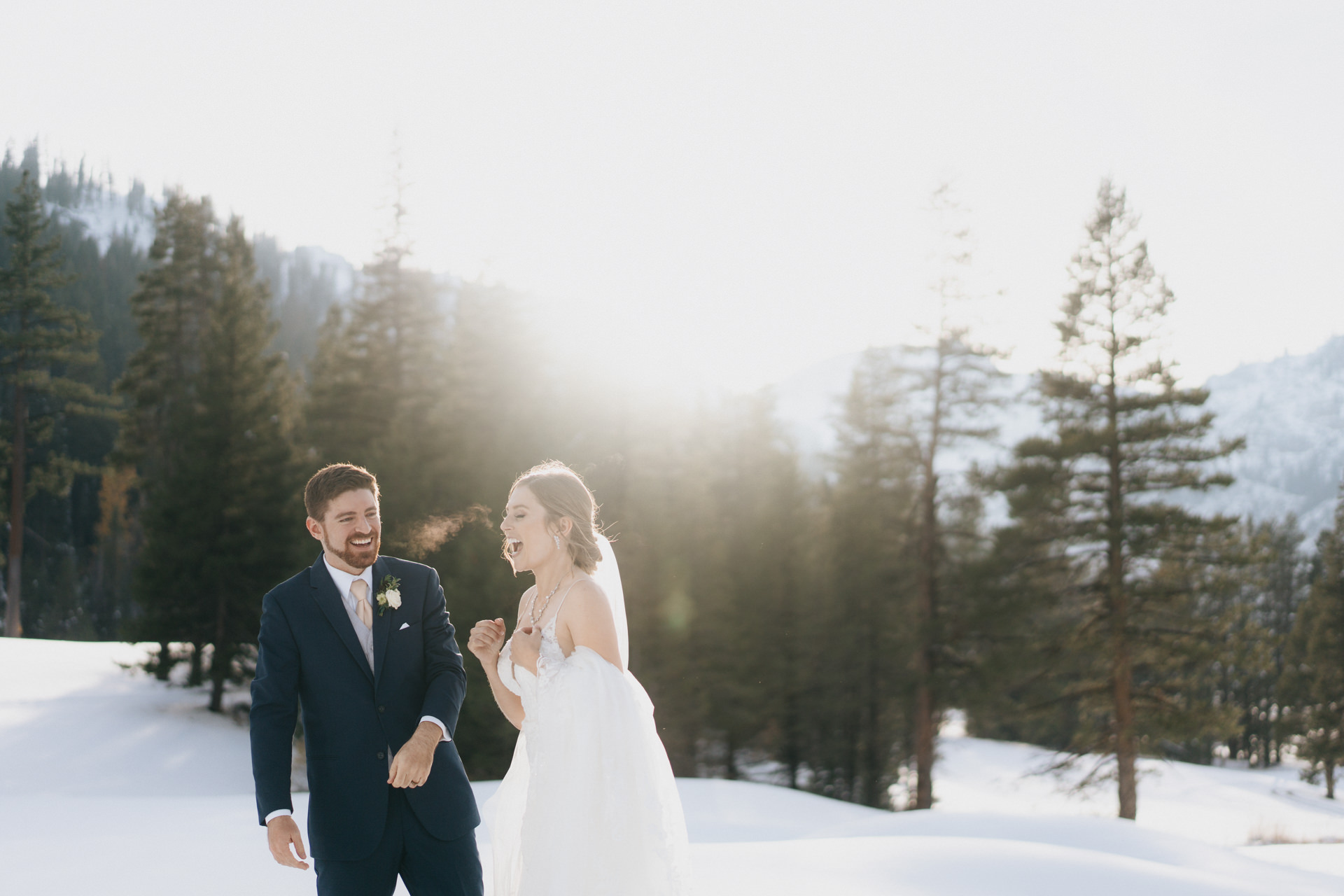
Snow bounces light everywhere. It fills in shadows, brightens faces and makes winter weddings look clean and bright even on gray days. It also tricks cameras into underexposing, and a lot of winter wedding photos end up looking blue and dark because of it. That is one of the reasons I edit for true-to-life color. Snow should look white, not blue.
Winter light is also the shortest. With the sun gone by mid-afternoon in some valleys, a first look is pretty much necessary to get your portraits in daylight. Megan and John’s winter wedding in Olympic Valley is a good example of what that light can do when you plan for it.

Smoke season
Some summers and falls bring wildfire smoke into the basin. Light smoke turns the sun orange and stacks the mountains into soft layers, and honestly it can look beautiful. Heavy smoke flattens everything and is rough on your guests. I wrote a whole post on what wildfire smoke does to wedding photos and how to plan for it.
What each season looks like
Summer has the most daylight and the most room in your timeline. It also has the hardest midday sun and the most afternoon wind. Plan portraits late.
Fall is my favorite light of the year. The sun stays lower all day, the air is clear, the aspens turn and the evenings get cold. The days get short fast, so a ceremony time that works in September is too late by late October.
Winter is bright and clean with snow, and it is short. Plan a first look and expect the light to leave early.
Spring is a mix. Snow on the peaks, a green or muddy valley floor and longer days. Check what your outdoor spaces actually look like before you count on them.
Why this matters when you hire someone
Anybody can shoot good photos in good light. A Tahoe wedding needs a photographer who knows when and where the good light is going to be at your venue, on your date, and who can still make it work when the plan falls apart. I wrote about that difference here.
If you are getting married at Tahoe and want to talk about how the light will work at your venue, send me your date. You can also look through my Lake Tahoe venue guides, including Everline Resort and Palisades Tahoe, or the full portfolio.
Lake Tahoe wedding light FAQ
What time is golden hour at a Lake Tahoe wedding?
Earlier than your phone says. At most Tahoe venues the sun drops behind a ridge before the official sunset, sometimes by an hour or more. In Olympic Valley in winter the light can leave the valley by 3:45pm. Your photographer should know the exact time for your venue and your date.
Is the east shore or west shore of Lake Tahoe better for sunset photos?
The east shore. Places like Sand Harbor face west, so the sun goes down over the lake. The west shore loses the sun behind the mountains earlier, but it gets the sunrise over the water and soft open shade in the evening.
Is midday light bad for Lake Tahoe wedding photos?
It is harsh. At over 6,000 feet the sun is bright and the shadows are hard. Plan ceremonies in open shade or later in the afternoon, and save portraits for when the sun gets low or goes behind the mountains.
What happens to wedding photos if there is wildfire smoke in Tahoe?
Light smoke turns the sun orange and the mountains into soft layers, and it can look beautiful. Heavy smoke flattens everything and is hard on guests. Have an indoor backup and a plan for moving portraits.
Keep reading: Santa Cruz weddings and Lake Tahoe elopements.